
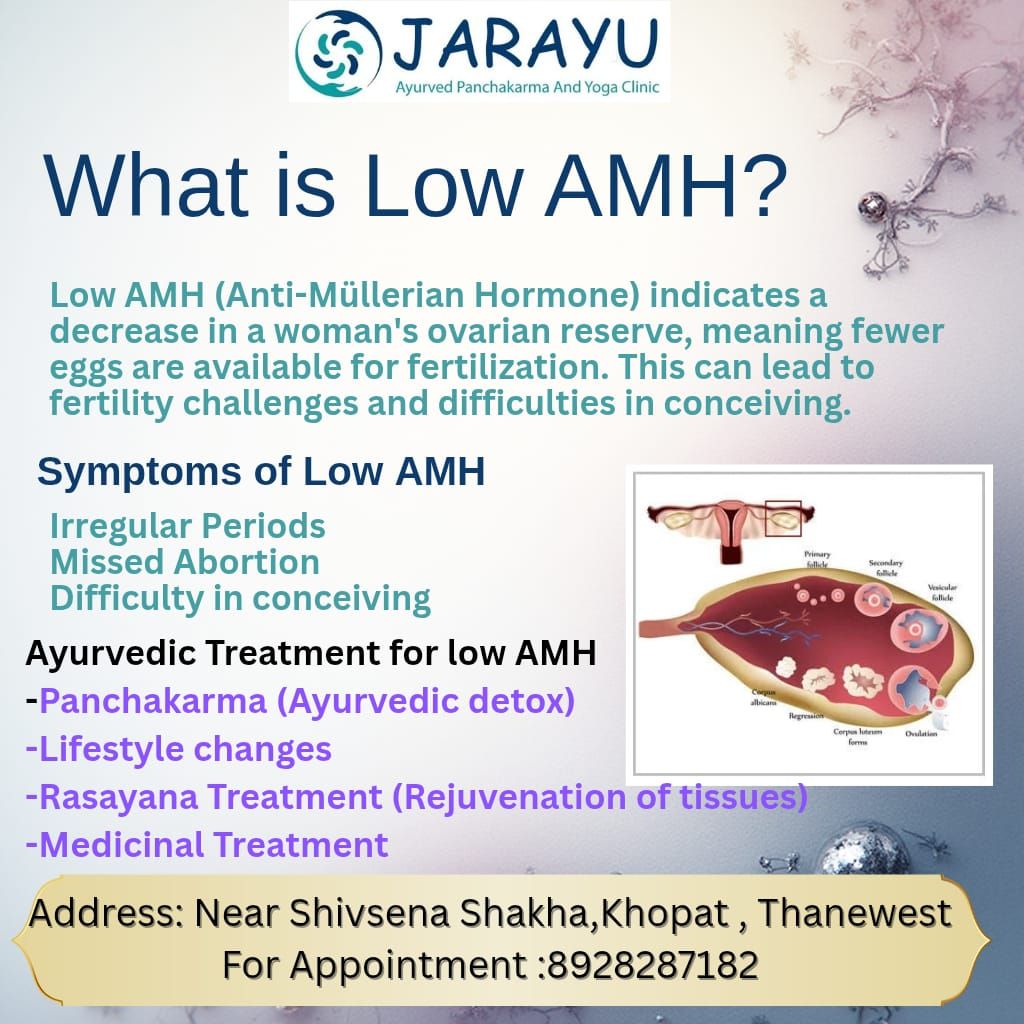
Understanding Low AMH and Its Ayurvedic Management.
What is AMH?
Anti-Müllerian Hormone (AMH) is a hormone secreted by small follicles in the ovaries. It reflects a woman’s ovarian reserve—that is, the number of eggs left in the ovaries.
Normal AMH: 1.5 – 4.0 ng/ml
Low AMH: below 1.0 ng/ml (indicates diminished ovarian reserve)
A low AMH level can make it difficult to conceive naturally and may indicate early ovarian aging. However, Ayurveda offers holistic ways to rejuvenate reproductive health and improve fertility.
🌿 Ayurveda’s View on Low AMH
In Ayurveda, fertility and ovulation are governed by the balance of Vata, Pitta, and Kapha doshas.
Low AMH is mainly related to depleted Shukra Dhatu (reproductive tissue) and Agnimandya (low metabolic fire), leading to Dhatukshaya (tissue depletion).
This condition can be correlated with Artava Kshaya — a state of reduced menstrual flow or quality of ovum due to imbalance in Vata and Pitta dosha.
Causes (Nidana)
Excess stress and anxiety
Irregular sleep patterns
Overuse of hormonal pills
Chronic diseases or long-term medication
Poor nutrition and weak digestion (Agnimandya)
Excessive fasting or crash diets
Environmental toxins and lifestyle disturbances
Ayurvedic Line of Treatment
Ayurveda focuses on restoring the quality and quantity of Shukra Dhatu, nourishing the ovaries, balancing hormones naturally, and enhancing fertility.
1. Aahar (Dietary Management)
Include fertility-boosting and Rasayana foods:
Fresh cow’s milk, ghee, and dry fruits (especially almonds, dates, walnuts)
Green moong, sesame seeds, and fresh fruits like pomegranate
Shatavari kheer, Ashwagandha milk, or Gokshura-infused water
Avoid – processed food, spicy and junk food, alcohol, caffeine, and smoking
2. Vihar (Lifestyle)
-Maintain regular sleep cycle (early to bed, early to rise)
-Practice Yoga and Pranayama – Bhramari, Anulom Vilom, Setubandhasana, Baddha Konasana
-Stress management with meditation and self-care rituals
-Avoid overexertion and emotional stress
3. Medicine Medicines
Some commonly used Ayurvedic formulations:
Shatavari Kalpa / Shatavari Ghrita – improves ovarian function and hormone balance
Ashwagandha Churna – reduces stress and enhances vitality
Phala Ghrita – promotes ovum quality and uterine health
Kalyanaka Ghrita – supports hormonal regulation
Putrajeevak Beej & Jeevanti – Rasayana for fertility enhancement
Kanchnar Guggul – supports thyroid and ovarian health
(Medicine selection is always done under guidance of Ayurvedic physician.)
4. Panchakarma for Rejuvenation
Detoxifying therapies help clear Aam (toxins) and rejuvenate the reproductive system.
Recommended therapies include:
•Uttarbasti – medicated oil/ghee administered vaginally to nourish uterus and ovaries
•Nasya – balances hormones through nasal route
•Abhyanga and Swedana – improve circulation and reduce stress
•Basti Chikitsa – strengthens Apana Vata and improves reproductive capacity
•vamana- Cleans the uterus and gut
Ayurvedic Concept of Rasayana Chikitsa
Rasayana therapy revitalizes all tissues, particularly Shukra Dhatu.
Rasayana herbs like Amalaki, Guduchi, Shatavari, Ashwagandha, Yashtimadhu, and Gokshura act as antioxidants, support hormonal balance, and slow down ovarian aging.
Low AMH is not the end of fertility — with Ayurveda’s holistic approach, one can strengthen the reproductive system naturally.
Through Rasayana therapy, Panchakarma, balanced diet, stress management, and ayurvedic medicines, women can improve egg quality and restore hormonal harmony.
🌿 “Ayurveda doesn’t just treat infertility — it nurtures fertility.”
📍 For personalized Ayurvedic consultation on fertility and hormonal balance, visit Jarayu Ayurveda Panchakarma & Yoga Clinic, Khopat, Thane (W).
8928287182